74th MUMEI-JUKU(15/10/2025)
Theme: Generative Science Pioneered by AI
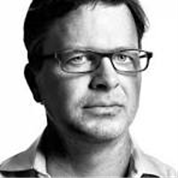
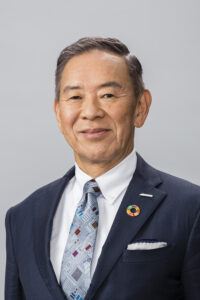
Guest Speaker: Dr. KOJI HASHIMOTO (Graduate School of Science, Division of Physics and Astronomy Professor,Activity Database on Education and Research, Kyoto University)
<Opening Remarks by Dr. Takeda>
Professor Hashimoto is a professor at Kyoto University’s Graduate School of Science and a direct successor to the research tradition of Dr. Hideki Yukawa. While specializing in physics and particle theory, he also holds a deep interest in the very foundations of intelligence itself. He is currently spearheading a pioneering project to establish “Learning Physics,” a new field integrating AI and physics, truly pushing the frontiers of knowledge.
Today’s lecture will focus on “AI for Science,” specifically the application of AI in scientific research.
In recent years, the rapid advancement of artificial intelligence technologies, including generative AI, has fundamentally transformed how researchers and practitioners conduct their work. While debates exist about whether AI will replace humans or if this development poses risks, a more crucial perspective is “how to integrate AI into human intelligence and utilize it as a tool to deepen science.” Movements in this field are becoming increasingly prominent. This spring, Google unveiled “AI Co-Scientist,” presenting the concept of a “virtual co-researcher” to support hypothesis building and research planning. Today, we will discuss the further evolved theme of “AI for Science” – specifically, how AI can be utilized as a scientific discipline within various fields.
Many leading research universities in the United States have already established AI-driven integrated research hubs. These hubs are advancing with support not only from the National Science Foundation (NSF) but also from the Department of Energy (DOE) and NASA. Attempts to utilize AI across diverse fields—such as Aix Environment, Aix Chemistry, and Aix Cybersecurity—are progressing, forming knowledge networks that include universities, U.S. national laboratories, and industry.
Dr. Hashimoto plays a central role in promoting Japan’s “AI for Science” initiative by gathering researchers from diverse fields within Kyoto University and collaborating with industry. Given these new trends of the era, Japan must urgently establish new research methodologies to utilize AI as a practical discipline. More importantly, the focus must be on advancing Japan’s intellectual capabilities and the foundations that support them.
European Commission President Ursula von der Leyen stated in her September State of the Union address this year, “We are now fighting for democracy and the very existence of Europe.” This refers not only to the situation in Ukraine but signifies a struggle to renew our institutions into ones that can withstand the next generation, by comprehensively addressing our economy, democracy, and science and technology as an integrated whole.
From an objective standpoint, Japan faces an environment that is even more challenging than Europe’s. Precisely for this reason, we must redraw the blueprint for knowledge in the next era. What matters most to us is implementing Critical and Emerging Technologies (CETs) like AI, semiconductors, and space as practical disciplines within society, and how to converge them to translate technology into societal applications. We hope Dr. Hashimoto’s lecture will be the first step in relearning “Science as Practical Discipline.”
<Comment by Dr. Takeda after the lectuer>
Professor Hashimoto’s lecture and the subsequent discussion highlighted numerous critical points, offering valuable insights. However, I feel Japan still lags behind in terms of applied science—that is, the practical application and implementation of science in the real world. Bridging this gap is a major challenge for the future.
Furthermore, professors at universities, including Kyoto University, should recognize the critical role of industry. In fact, it is often said that industry frequently leads universities in expertise regarding cutting-edge technologies like large language models (LLMs). This is clearly evident from the situation at U.S. universities. Former Stanford University President John Hennessy currently serves as Chairman of Alphabet Inc., Google’s parent company. This exemplifies the powerful operational capabilities and influence universities wield within industry, highlighting what feels like a decisive difference compared to Japanese universities. Japan should take this seriously and build a system to promote innovation through industry-government-academia collaboration.
With fewer points of contact overseas, it’s easy to fall into idealistic thinking. However, we must gain direct insight into what is actually happening in the world. Unless we listen to what is happening on the ground overseas, the real issues will remain hidden. We should seriously consider how to respond to major global trends, taking into account geopolitical perspectives. Fundamentally, we need to tackle a series of challenges starting with promoting OSS (Open Source Software), including strengthening the application and implementation infrastructure.
I deeply hope that Professor Hashimoto will continue to vigorously lead these pioneering initiatives. I also earnestly hope that he will exert his influence to the fullest, working with the top leadership at Kyoto University and other universities, demonstrating the resolve for universities to spearhead innovation in Japan.